
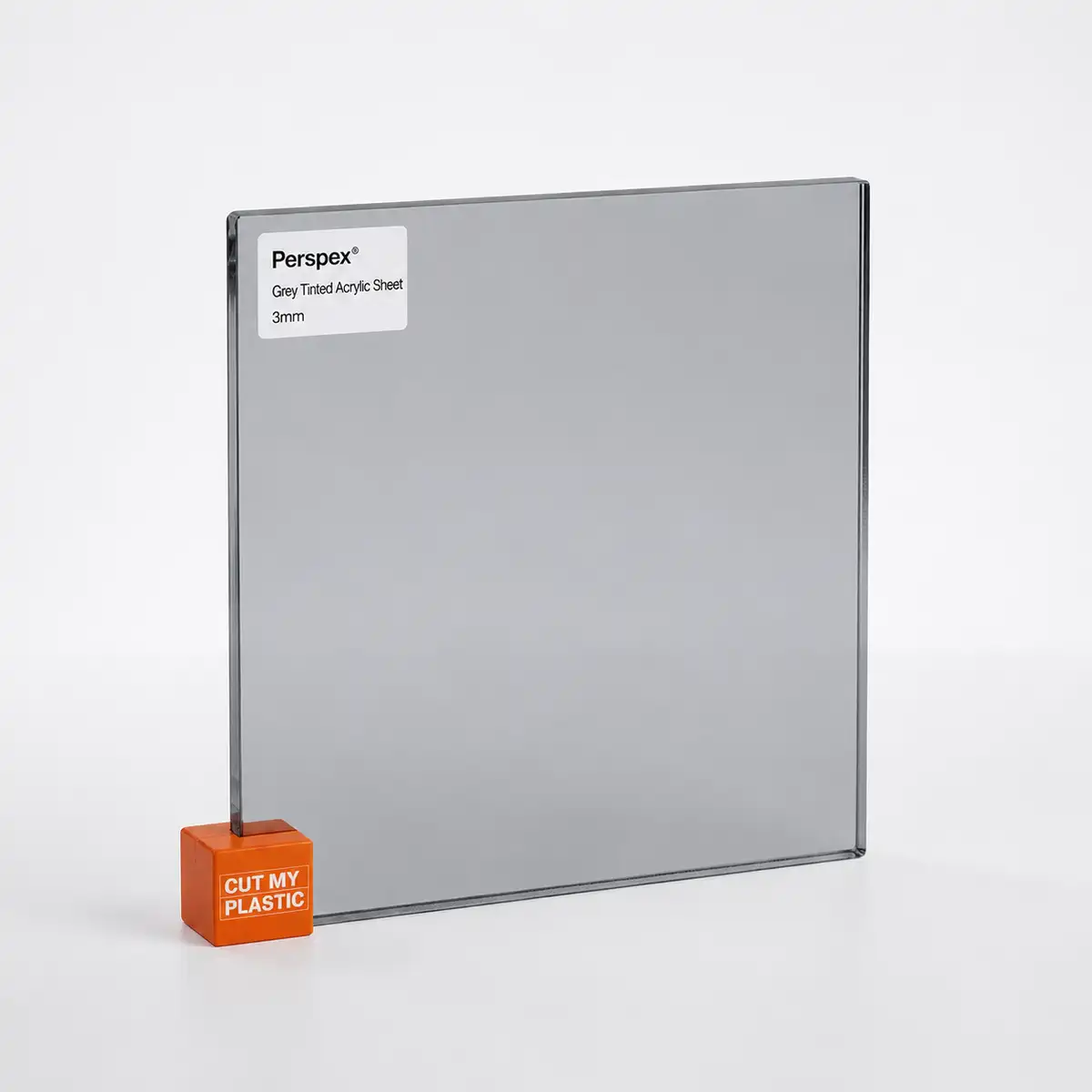
Use this clear acrylic Perspex thickness guide to choose a sheet that feels right for your panel size, support and intended use.
Start with the size of the panel
The right clear acrylic Perspex sheet thickness depends on the panel size, how the panel is supported and how it will be used. A small display cover has very different needs from a large unsupported screen. As the panel gets larger, it normally needs more thickness or better edge support to feel rigid.
If a sheet will sit in a frame, rest on all four edges or act as a simple cover, it can often be thinner than a panel that is only fixed on one side. Unsupported acrylic can flex, so bigger panels need a more careful thickness choice.
Common thickness choices
Thin clear acrylic is often used for lightweight display work, small signs, craft panels and simple covers. Mid-range thicknesses are popular for replacement glazing, cabinet doors, shelf fronts, guards and more general DIY projects. Thicker acrylic is chosen where the panel needs a stronger, more premium feel or where the span is larger.
There is no single thickness that suits every job. The best choice is the one that balances rigidity, weight, budget and the way the sheet is fixed in place.
Think about support and fixing
Acrylic sheet performs best when it is supported properly. A panel held in a frame on all sides can feel more stable than a panel fixed at only two points. If you are drilling holes, allow enough edge distance and avoid overtightening fixings, because plastic sheet needs a little tolerance for movement.
For protective screens, splashback covers and mounted panels, use fixings or adhesive methods that suit the wall, frame and environment. If the sheet is likely to be bumped, consider using a thicker panel or choosing polycarbonate for higher impact resistance.
Indoor, outdoor and cleaning considerations
Clear acrylic is widely used indoors and can also be used for many sheltered outdoor projects. For longer outdoor exposure, check the grade, support and fixing method before ordering. Sun, heat, wind and movement can all affect how a panel behaves over time.
Cleaning also matters. Use a soft cloth and mild soapy water. Avoid abrasive cleaning pads, solvent cleaners and rough handling, especially on display panels where surface marks will be more visible.
A simple way to order the right size
Once you know the thickness you need, the easiest route is to order clear acrylic Perspex sheet cut to size. Measure the height and width in millimetres, check whether the panel sits inside a frame or over a surface, then enter those dimensions online.
If you are unsure between two thicknesses, choose the option that gives enough stiffness for the size and use of the panel. A slightly stronger panel is often worth it when the sheet will be handled often or fitted in a visible area.
Clear Acrylic Perspex FAQs
Is 3mm clear acrylic sheet strong enough?
It can be suitable for smaller panels, display covers and light-duty uses. Larger panels or panels with less support may need a thicker sheet.
Does thicker acrylic look clearer?
Thickness mainly affects rigidity and weight. Clear acrylic has good transparency across common thicknesses, although thicker edges will look more substantial.
Should I choose acrylic or polycarbonate for impact resistance?
Choose acrylic for clear display quality and general use. Choose polycarbonate when impact resistance is the main priority.